


-
appelez nous
+8619906035385 -
Envoyez-nous un email
ping@aotbattery.com
appelez nous
+8619906035385Envoyez-nous un email
ping@aotbattery.com
Les batteries sodium-ion (SIB) se sont imposées comme l'une des alternatives les plus prometteuses aux batteries lithium-ion (LIB) pour le stockage d'énergie à grande échelle et l'électronique portable à bas coût, grâce à l'abondance du sodium, son faible coût et son comportement électrochimique similaire à celui du lithium. Cependant, les SIB font face à des défis majeurs : le rayon ionique plus important de Na⁺ (1,02 Å contre 0,76 Å pour Li⁺) ralentit la diffusion des ions, tandis que la dilatation volumique des matériaux d'électrode lors des cycles de charge/décharge dégrade la stabilité de la batterie. Pour pallier ces problèmes, les chercheurs se tournent vers des matériaux fonctionnels avancés, et la poudre de polypropylène nanofibreux (NFPP) s'est révélée être une solution particulièrement intéressante. Grâce à sa structure nanofibreuse unique, sa porosité élevée, son excellente résistance mécanique et son inertie chimique, la poudre de NFPP révolutionne les composants clés des SIB – des séparateurs et électrodes aux modificateurs d'électrolyte – en améliorant significativement leurs performances et leur industrialisation.
Propriétés clés de la poudre NFPP permettant le développement des SIB
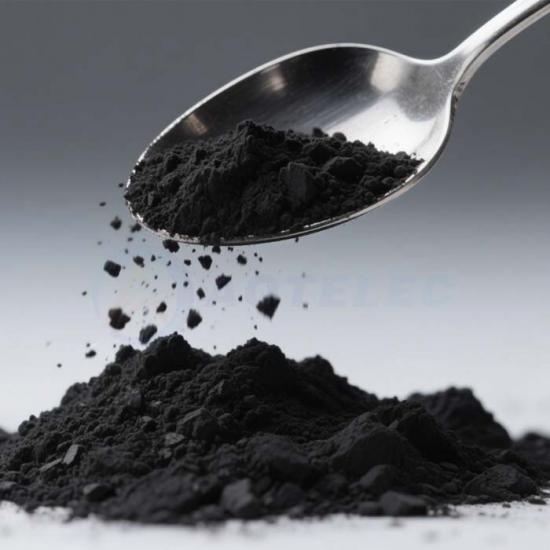
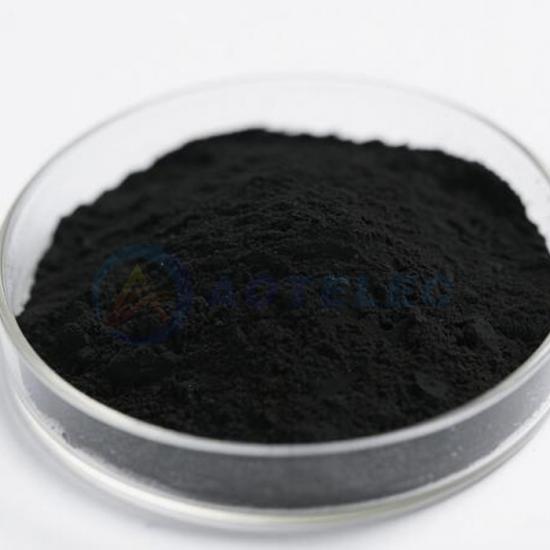
Poudre NFPP
Ce matériau est dérivé du polypropylène (PP), un polymère largement utilisé dans la technologie des batteries, transformé en nanofibres par des techniques telles que l'électrofilage suivi d'un broyage mécanique ou le filage par soufflage de solution. Ses caractéristiques déterminantes le rendent idéal pour les batteries sodium-ion.
Porosité élevée et structure poreuse optimisée : la poudre NFPP présente un réseau poreux dont la porosité dépasse 70 % et dont les pores interconnectés mesurent de 50 à 200 nm. Cette structure crée de nombreux canaux pour le transport des ions Na⁺, palliant ainsi le problème de diffusion lente lié à leur grande taille.
Résistance mécanique supérieure : L'architecture nanofibreuse confère à la poudre NFPP une résistance à la traction élevée (≥25 MPa) et une flexibilité, lui permettant de résister à l'expansion volumique des électrodes SIB (par exemple, les anodes en carbone dur se dilatent de 10 à 20 % lors de la sodiation).
Principales applications de la poudre NFPP dans les composants SIB
1. Séparateurs modifiés par poudre NFPP : Amélioration du transport et de la sécurité des ions
Les séparateurs sont des composants essentiels des batteries sodium-ion (SIB) qui empêchent les courts-circuits tout en permettant la diffusion des ions Na⁺. Les séparateurs en polypropylène (PP) classiques présentent une faible porosité (environ 40 %) et une mauvaise mouillabilité par les électrolytes, ce qui limite la conductivité ionique. La poudre de polypropylène non fonctionnalisé (NFPP) remédie à ces défauts lorsqu'elle est utilisée comme revêtement ou charge composite pour les séparateurs.
Lorsqu'il est appliqué sur des surfaces commerciales
Séparateurs PP
D'une épaisseur typique de 10 à 20 μm, la poudre de NFPP forme une couche nanofibreuse poreuse qui augmente la porosité globale de 60 à 75 % et améliore la mouillabilité de l'électrolyte (angle de contact ≤ 20° contre ≥ 45° pour le PP non modifié). Cette modification améliore la conductivité ionique Na⁺ de 2 à 3 fois (de ~1 mS/cm à 2–3 mS/cm à 25 °C) et réduit la résistance interfaciale entre le séparateur et les électrodes. Une étude de 2024 publiée dans le Journal of Power Sources a démontré qu'un séparateur modifié par NFPP améliorait la capacité de charge/décharge rapide d'une batterie SIB carbone dur/LFP (phosphate de fer lithié, adapté aux batteries sodium-ion sous forme de phosphate de fer sodique) : la batterie conservait 85 % de sa capacité à 5C (cycle de charge/décharge d'une heure) contre 55 % avec un séparateur PP non modifié.
La poudre de NFPP améliore également la stabilité mécanique du séparateur. Lors des cycles de charge/décharge, le réseau nanofibreux résiste à la déchirure causée par les variations de volume des électrodes, réduisant ainsi le risque de courts-circuits internes. De plus, la stabilité thermique du NFPP (point de fusion d'environ 167 °C) améliore la sécurité de la batterie en préservant son intégrité structurelle à haute température.
2. Poudre de NFPP comme liant/matrice dans les électrodes SIB
Les liants d'électrodes jouent un rôle essentiel dans l'adhérence des matériaux actifs, des additifs conducteurs et des collecteurs de courant. Les liants conventionnels comme le fluorure de polyvinylidène (PVDF) présentent une faible flexibilité et une compatibilité limitée avec les systèmes à base de sodium, ce qui entraîne la fissuration des électrodes lors des cycles de charge/décharge. La poudre de NFPP, utilisée comme liant ou matrice composite, résout ce problème.
Dans les anodes en carbone dur (le matériau d'anode le plus abouti pour les batteries sodium-ion), l'ajout de 5 à 10 % en poids de poudre de NFPP comme liant crée un réseau flexible et poreux qui absorbe la dilatation volumique. Les nanofibres forment des liaisons physiques fortes avec les particules de carbone dur et les collecteurs de courant en cuivre, empêchant ainsi le décollement de l'électrode. Des tests en laboratoire montrent que les anodes en carbone dur avec liant NFPP conservent 90 % de leur capacité initiale (300 mAh/g) après 1 000 cycles, contre 70 % avec des liants PVDF.
Pour les cathodes (par exemple, l'oxyde de sodium-nickel-manganèse, NaNi₁/3Mn₁/3Co₁/3O₂), la poudre de NFPP sert de matrice conductrice. Sa conductivité élevée (améliorée par carbonisation ou dopage) optimise le transport des électrons au sein de la cathode, tandis que sa porosité facilite la diffusion des ions Na⁺. Des chercheurs de l'Université de Tokyo ont constaté que des cathodes de type NMC renforcées par du NFPP atteignaient une capacité spécifique de 150 mAh/g et une rétention de capacité de 88 % après 500 cycles, surpassant ainsi de 15 % les cathodes à base de PVDF.
3. Poudre NFPP dans les batteries sodium-ion à l'état solide (SSIB)
Les batteries sodium-ion à l'état solide (SSIB) éliminent les électrolytes liquides, réduisant ainsi les risques de fuite et d'emballement thermique. Cependant, les électrolytes solides (SE) souffrent d'une faible conductivité ionique et d'un contact interfacial médiocre avec les électrodes. La poudre de NFPP sert de matrice polymère pour les électrolytes solides composites (CSE), palliant ces limitations.
En mélangeant de la poudre de NFPP avec des charges céramiques conductrices de sodium (par exemple, Na₃Zr₂Si₂PO₁₂, NZSP) et des sels de sodium (par exemple, NaTFSI), les chercheurs créent des électrolytes céramiques (CSE) présentant une conductivité ionique élevée (environ 10⁻³ S/cm à 25 °C) et une excellente flexibilité. La matrice de NFPP améliore la dispersion des charges céramiques et renforce le contact interfacial avec les électrodes, réduisant ainsi la résistance interfaciale de 50 %. Dans un prototype récent de batterie à électrolyte solide (SSIB) utilisant un CSE NFPP-NZSP, la batterie a fourni une capacité de 140 mAh/g et une cyclabilité stable pendant 800 cycles, une étape cruciale vers la commercialisation des SSIB pour le stockage sur réseau.
Défis techniques et orientations d'innovation
Malgré son potentiel, la poudre NFPP se heurte à des obstacles qui freinent son adoption généralisée par les SIB :
Problèmes de dispersion : les nanofibres de NFPP ont tendance à s’agglomérer dans les composites, ce qui réduit la porosité et la conductivité effectives. Les chercheurs s’attaquent à ce problème par modification de surface (par exemple, traitement plasma ou agents de couplage silane) afin d’améliorer la compatibilité avec d’autres matériaux.
Limitations de la conductivité ionique : le NFPP pur a une faible conductivité Na⁺ ; les innovations futures se concentrent sur le dopage du NFPP avec des liquides ioniques ou des polymères conducteurs pour améliorer le transport des ions.
Coût de production des nanofibres : Si le PP est bon marché, l’électrofilage du NFPP à grande échelle reste onéreux. Les techniques émergentes, comme le filage par fusion-soufflage, permettent de réduire les coûts de production de 40 %, rendant ainsi la poudre de NFPP plus compétitive.
Perspectives d'avenir : La poudre NFPP, moteur de la commercialisation SIB
Face à la demande mondiale croissante de solutions de stockage d'énergie durables et économiques, les batteries sodium-ion (SIB) sont prêtes à conquérir le marché du stockage sur réseau, des deux-roues électriques et des applications hors réseau. La poudre NFPP jouera un rôle essentiel dans cette transition en palliant les limitations de performance fondamentales des SIB. Principales tendances :
Production à l'échelle industrielle : des entreprises comme Toray et Asahi Kasei augmentent la production de poudre NFPP, visant des quantités de tonnage pour la production de cellules SIB d'ici 2027.
La poudre de NFPP illustre comment les matériaux polymères avancés peuvent transformer la technologie des batteries. Grâce à sa structure nanofibreuse unique, sa résistance mécanique et son faible coût, les chercheurs et les fabricants exploitent pleinement le potentiel des batteries sodium-ion (SIB) comme alternative durable aux batteries lithium-ion (LIB). À mesure que les innovations dans la production et la modification de la NFPP se poursuivent, les SIB alimentées par cette poudre deviendront un pilier de la transition énergétique mondiale, permettant un stockage d'énergie abordable, sûr et performant pour les décennies à venir.
Mots clés :

tel/Whatsapp: +8619906035385


 IPv6 network supported
Scan to wechat: