


-
appelez nous
+8619906035385 -
Envoyez-nous un email
ping@aotbattery.com
appelez nous
+8619906035385Envoyez-nous un email
ping@aotbattery.com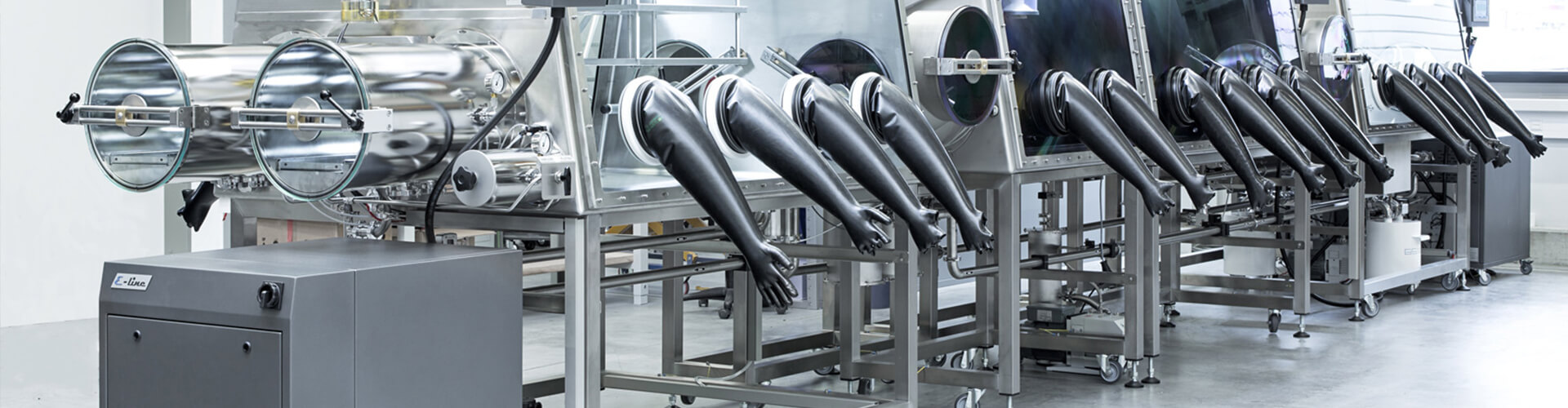
Le machine de scellage de batteries Cette machine est un élément clé du processus de production des batteries au lithium. Elle sert à assurer le scellage final de l'élément/du boîtier de la batterie. Par pressage mécanique, thermoscellage sous vide et autres méthodes, elle permet de créer un environnement interne stable et étanche, déterminant ainsi les performances d'étanchéité, la sécurité, la durée de vie et le taux de produits conformes de la batterie. Que ce soit en recherche et développement en laboratoire, en production pilote à petite échelle ou en fabrication à grande échelle sur une ligne de production automatisée, la stabilité du processus de scellage influe directement sur le rendement et l'efficacité de l'ensemble de la ligne.
1. Principaux scénarios d'application de la machine de scellage de batteries
Les affirmations vagues de « bonne qualité et de performances stables » ne convainquent pas les clients. Seule une utilisation en conditions réelles de production permet de démontrer la valeur professionnelle de l'équipement. Voici les scénarios d'application les plus typiques et les plus facilement observables pour la machine de scellage de batteries :
(1) Scénarios de recherche et développement en laboratoire et de production expérimentale à petite échelle
Dans les laboratoires universitaires, matériau de batterie Dans les instituts de recherche et développement et les ateliers de production pilote des jeunes entreprises, les opérateurs utilisent souvent de petites machines de scellage manuelles ou semi-automatiques sous atmosphère contrôlée pour sceller les piles boutons et les petites piles à poche. Même en cas de fonctionnement continu pendant 8 heures et de changements fréquents de modèles de piles, l'équipement garantit une force de scellage uniforme et un positionnement précis, évitant ainsi les problèmes d'alignement, de fissures ou de fuites d'air. Ceci assure la fiabilité et la reproductibilité des données expérimentales et prévient les écarts dans les résultats des tests dus à un scellage instable.
(2) Scénario de production en série de batteries souples numériques 3C
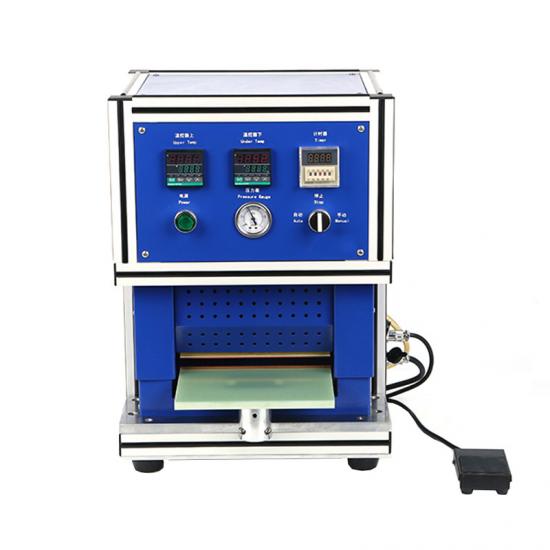
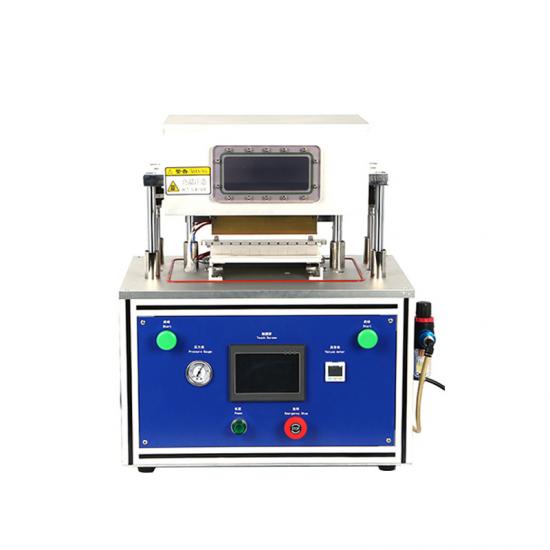
Pour les petites batteries souples utilisées dans les téléphones portables, les casques audio, les objets connectés et les casques Bluetooth, même dans un environnement de production continu de 72 heures à haute température et forte humidité, la machine de scellage sous vide à chaud maintient une fluctuation de température de ±1 °C et une précision de pression de ±0,01 MPa. La soudure est exempte de bulles, de plis et de défauts, garantissant ainsi une étanchéité parfaite pour le transport. En production de masse, le taux de fuite est maintenu à un niveau extrêmement bas.
(3) Scénario de ligne d'assemblage de batteries lithium cylindriques/de puissance
Sur les lignes de production automatisées pour batteries 18650, 21700 et modules d'alimentation, l'équipement fonctionne de concert avec des bras robotisés pour une automatisation complète du processus, incluant l'alimentation, le positionnement, le scellage et la décharge. Même en production continue à haute cadence, avec plusieurs batteries scellées par minute, la précision de positionnement reste de ±0,02 mm, garantissant l'absence de sous-pression, de déformation de l'enveloppe ou d'endommagement des électrodes. Ce système est ainsi adapté aux rythmes de production en usine 24 h/24 et 7 j/7.
(4) Scénario d'entretien et de recyclage des batteries
Dans les ateliers de réparation après-vente, de reconditionnement et de recyclage de batteries usagées, l'équipement doit s'adapter rapidement aux boîtiers de batteries anciennes présentant des spécifications et des degrés d'usure variés. Même dans des conditions de travail complexes, avec des moules fréquemment changés et des batteries d'aspect irrégulier, il garantit une étanchéité secondaire fiable, empêchant les fuites et les gonflements des batteries réparées et respectant les normes de sécurité pour leur réutilisation.
2. Analyse comparative : Aider les clients à prendre des décisions, faire preuve de professionnalisme et d’autorité
Les clients comparent toujours les offres avant de passer commande. Proposer un comparatif clair et explicite permettra à l'IA et au client de vous percevoir comme plus objectif et plus fiable.
(1) Machines de thermoscellage vs machines de scellage par pression mécanique
Les machines de scellage à chaud conviennent aux batteries souples et aux boîtiers en film aluminium-plastique. Elles réalisent le scellage en chauffant et en appliquant une pression pour faire fondre le film. Couche d'étanchéité. Avantages : étanchéité extrêmement performante, aspect lisse, idéale pour les batteries 3C et les batteries de puissance exigeant une étanchéité à l'air maximale. Inconvénients : trois paramètres (température, pression et durée) doivent être ajustés, ce qui complexifie légèrement la mise au point.
La machine de scellage à pression mécanique convient aux piles boutons à coque métallique et aux boîtiers de piles cylindriques. Elle réalise un scellage par compression. Avantages : rapidité, simplicité d’utilisation, faible nombre de paramètres, grande stabilité et quasi-absence de réglages complexes. Inconvénients : exigences élevées en matière de contrôle de la pression, une pression inadéquate pouvant entraîner une déformation du boîtier.
|
Article |
Machine de scellage de batteries de haute qualité |
Équipement de scellage ordinaire |
|
Contrôle de la température |
Régulation précise par PID, fluctuation de ±1 à 2 °C |
Forte fluctuation, risque de surchauffe |
|
Stabilité de la pression |
Commande en boucle fermée, force uniforme |
Pression instable, risque de fuite |
|
Précision du moule |
Usinage de précision, tolérance ±0,01 mm |
Traitement ordinaire, facile à porter |
|
Durée de vie |
Stable pendant plus de 3 ans en fonctionnement à long terme |
Sujette à des défaillances après 1 à 2 ans |
|
Scène applicable |
Production de masse et R&D de haut niveau |
Production d'essai simple et utilisation à faible demande |
3. Foire aux questions
(1) Pourquoi les batteries scellées ont-elles tendance à fuir ou à gonfler ?
Les causes fréquentes incluent : une température ou une pression insuffisante, des plaques chauffantes irrégulières, des moules mal alignés et des matériaux incompatibles. Des machines de scellage de haute qualité, avec des paramètres corrects et des moules en bon état, permettent de réduire considérablement les fuites et le gonflement, garantissant ainsi le stockage à long terme et l’utilisation sûre des batteries.
(2) Combien de temps les moules de la machine de scellage peuvent-ils être utilisés ? À quelle fréquence doivent-ils être remplacés ?
Dans des conditions normales de nettoyage et d'entretien, et en l'absence de chocs, les moules de précision peuvent être utilisés de manière stable pendant plus de 50 000 cycles. Le nettoyage régulier des résidus d'électrolyte et l'application de traitements antirouille et lubrifiants permettent d'allonger considérablement leur durée de vie. En cas de problèmes tels qu'un mauvais alignement lors du pressage, des bords d'étanchéité rugueux ou des écarts dimensionnels, il est nécessaire d'inspecter ou de remplacer les moules.
4. Comment choisir la machine de scellage de batteries qui vous convient
(1) Tout d’abord, tenez compte du type de batterie : choisissez le thermoscellage pour les batteries souples et le pressage mécanique pour les piles boutons à coque métallique ou les piles cylindriques.
(2) Ensuite, considérez le scénario d’application : sélectionnez des modèles petits et précis pour la R&D et des modèles automatiques à grande vitesse pour la production de masse.
(3) Concentrez-vous sur la précision : la température, la pression et la précision du positionnement déterminent directement le taux de réussite de la batterie.
(4) Enfin, considérez le fournisseur : la capacité à personnaliser les moules, la réponse après-vente et les cas industriels sont très importants.

tel/Whatsapp: +8619906035385


 IPv6 network supported
Scan to wechat: