


-
appelez nous
+8619906035385 -
Envoyez-nous un email
ping@aotbattery.com
appelez nous
+8619906035385Envoyez-nous un email
ping@aotbattery.com
1. What Is a Battery Coating Machine?
A battery coating machine is a roll-to-roll continuous dedicated process equipment and a core piece of equipment in the production of lithium-ion, sodium-ion, and supercapacitor electrode sheets. The complete system consists of a slurry supply system, a coating die, an unwinding mechanism, a multi-zone drying oven, a tension control system, a rewinding mechanism, and an online inspection module. During operation, the prepared cathode or anode slurry is uniformly coated onto the surface of copper foil or aluminum foil substrates, the solvent is removed through gradient drying, and the coated material is finally rewound into electrode sheet rolls, preparing it for subsequent rolling, slitting, and winding/stacking processes. According to the coating method, mainstream types are mainly divided into two categories: slot-die coating and transfer coating, covering different specifications for laboratory prototyping, pilot-scale R&D, and large-scale mass production.
2. The Role of Battery Coating Machines
The coating process directly determines the basic quality of the cell, and the coating machine plays an irreplaceable process role. It stably attaches active materials to current collector foils to form a uniform electrode coating; controls the coating basis weight and thickness uniformity to ensure consistent capacity across every cell; removes organic solvents from the slurry through a controlled drying process to avoid risks of gas generation and fire caused by solvent residue; and supports intermittent stripe coating to reserve tab-free areas, meeting the structural design requirements of power batteries. Coating stability continuously affects cell cycle life, internal resistance consistency, yield rate, and overall line availability. Once coating defects such as streaks, uneven thickness, material shedding, or foil breaks occur, they are difficult to repair in subsequent processes and can directly lead to large-scale scrap.
3. Core Application Scenarios
Mass Production Lines for Power Batteries in New Energy Vehicles
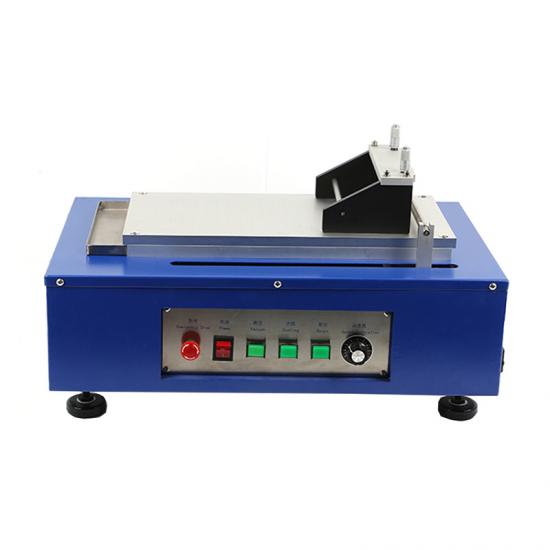
In workshops with ambient temperatures of 35–42°C and saturated solvent vapor, our slot-die battery coating machine can operate stably at 80–120 m/min and accommodate foil widths of 1300–1600 mm. After continuous full-load operation for 72 hours, the transverse basis weight tolerance remains stably within ±1%, and the foil break rate is below 0.08%. It supports continuous double-sided coating and intermittent stripe coating, is compatible with LFP, ternary, and high-nickel formulations, and meets the high-takt production requirements of power battery factories.
Energy Storage Battery (ESS) Production Lines
Energy storage cells pursue low cost and long cycle life, making them more sensitive to coating thickness deviation. Under coating conditions for thick-electrode slurries with a solids content of >68%, the closed-loop tension control system keeps tension fluctuation of 6 μm ultra-thin copper foil within ±2 N, preventing substrate stretching, wrinkling, and coating delamination. The multi-zone independently temperature-controlled drying oven addresses common defects in thick electrodes, such as solvent residue and surface cracking.
Pilot and Small-Batch Production Lines for Sodium-Ion Batteries and Supercapacitors
For R&D laboratories and pilot lines debugging new sodium-ion battery slurries, the equipment supports rapid switching of coating width, die gap, and web speed. During repeated low-speed formula validation at 2–15 m/min, it eliminates coating ripple defects caused by motor torque pulsation. It can also be used for coating conductive carbon layers and activated carbon electrodes for supercapacitors.
4. Comparative Analysis: Slot-Die Coating vs. Transfer Coating
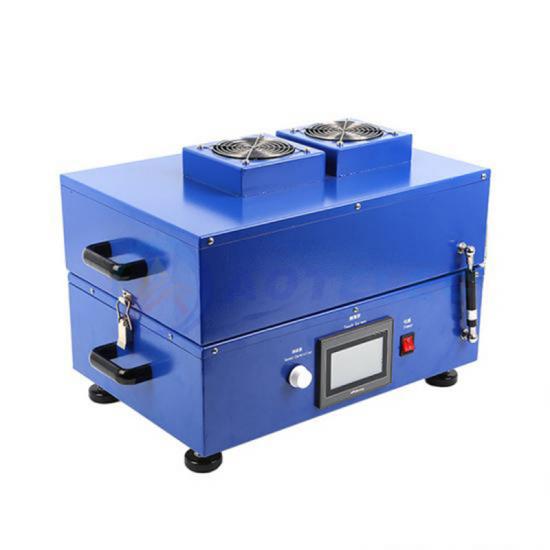
Slot-die coating can achieve a coating basis weight accuracy of ±1% and is suitable for high-solids, high-viscosity, and thick-electrode slurries, with a typical web speed range of 60–120 m/min. This solution is mainly aimed at power battery factories, large-scale energy storage factories, and high-energy-density cell manufacturers; during stable mass production, the overall equipment effectiveness (OEE) can reach above 92%. Its investment cost is relatively higher, and its weakness is the stringent requirements for slurry filtration and slurry supply system stability.
Transfer coating has a coating basis weight accuracy range of ±3% to ±5%, is more suitable for low-viscosity conventional slurries, and has a typical web speed of 30–70 m/min. The target customers are mostly consumer batteries, low-cost standard cells, and simple pilot lines. The overall production efficiency in mass production remains at 80%–86%, with lower equipment procurement investment, but it is difficult to meet the stringent requirements of power batteries for high electrode consistency.
Conclusion: For end products such as new energy vehicle batteries and long-cycle-life energy storage cells, slot-die extrusion coating is the mainstream and reliable solution; transfer coating is only suitable for low-precision, cost-driven projects.
5.FAQ
Q1: Why does uneven thickness across the width occur after a coater has been running for a period of time?
A: There are three main reasons: ① The die head is subjected to prolonged heat, and the absence of a thermal compensation structure causes gap deformation; ② The backup roll wears unevenly, creating local pressure differences; ③ Pulsation from the slurry transfer pump creates periodic streak defects. Solutions: use a coating die head with thermal deformation compensation, regularly calibrate the backup roll flatness, and install a pulsation damper in the feed line.
Q2: What causes foil breaks during coating?
A: The most common cause is tension shock during automatic tape splicing and during acceleration/deceleration. The next most common causes are guide roll jamming, burrs on roll surfaces, and slurry edge clumps that scrape and tear the foil. High-quality equipment is equipped with pre-synchronization for tape splicing and tension buffering algorithms to suppress instantaneous tension peaks.
Q3: Can one coater switch between producing lithium-ion and sodium-ion battery slurries?
A: Yes, but two points should be noted: sodium-ion slurry differs significantly from lithium-ion slurry in viscosity, settling characteristics, and wettability. When switching production, the die head, lines, and tanks must be thoroughly cleaned to prevent cross-contamination. It is recommended to save two separate recipe parameter sets for sodium-ion and lithium-ion batteries on the HMI.
Q4: What is the normal OEE target for a mass-production coater?
A: For a mature slot-die coating production line for power batteries, a qualified OEE is above 90%. If it remains below 75% for a long time, the bottleneck is usually caused by unstable tension, die head clogging, uneven temperature zones in the oven, or insufficient operator training.
Q5: What is the difference between intermittent coating and continuous coating?
A: Continuous coating applies coating to the entire foil surface and is mostly used for energy storage cells and some consumer cells. Intermittent coating (strip coating) leaves blank tab areas on the foil and is the mainstream process for power batteries. High-end models support one-touch switching between the two modes without modifying the mechanical structure.

tel/Whatsapp: +8619906035385


 IPv6 network supported
Scan to wechat: